
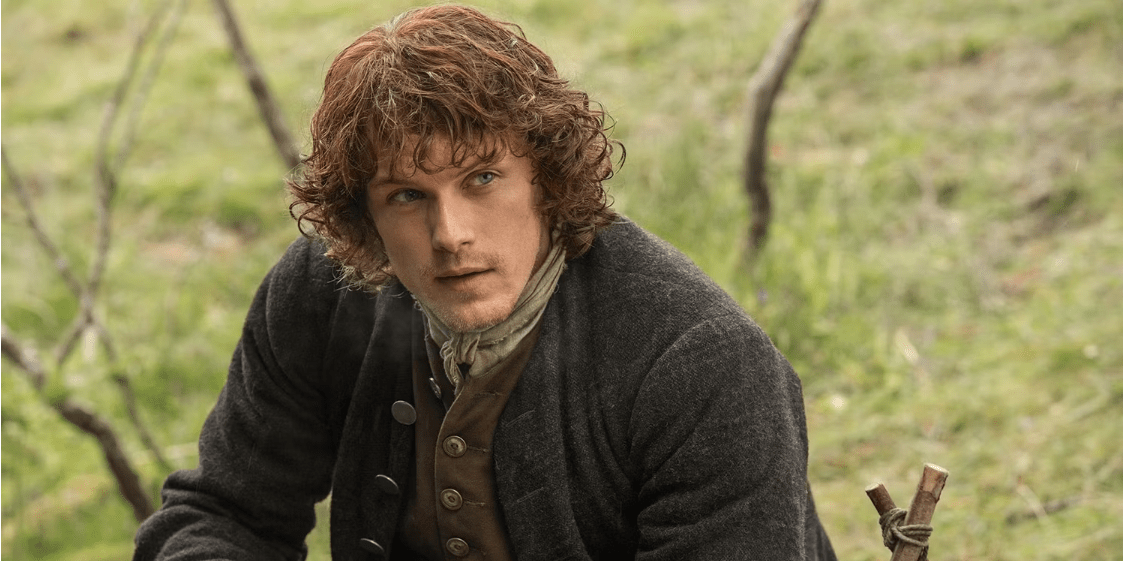

Jamie Fraser is the undisputed romantic hero of the Outlander franchise, a role which automatically positions him as a morally and ethically sound man, incapable of senseless violence or unjustified crime. In both the novels and television series, Jamie is the primary love interest of Claire Fraser, the heroine of the narrative, but also her physical protector. Throughout their relationship this role frequently places Jamie in a position where he must maim or kill in order to protect Claire. His actions in such situations are always extreme acts of violence and aggression, and often result in murder. As he has already been coded as the hero however, the automatic response among audiences is to dismiss Jamie’s crimes by rationalizing his behaviour as acceptable. This is a position which is strengthened at the outset of the story by his innocence and devotion to Claire. But is this a logical perspective to hold? Does it represent a morally sound perception of Jamie’s character or merely dismiss violence and crime simply because it has been perpetrated by his hand? Would Jamie even agree with how his audience perceives him?
Drawing on Diana Gabaldon’s novels, along with the Starz adaptation, my discussion examines the question of justifiable murder from the dual perspective of the audience and from Jamie himself. Primarily, it looks at the character of Jamie and his response to his own acts of aggression and murder (those related to Claire directly and those not) assessing how these are justified by him directly and, in instances where he shows some moral ambiguity, other characters within the narrative. As will become evident, the moral toll of murder plays a large role in how Jamie comes to understand himself and his place within the world. Though Jamie’s love for his wife is not in question, the moral burden of his actions frequently weighs heavily upon him and plays a central role in his transition into manhood. How and where murder is used within this development is central to Jamie’s role within the narrative.
Having established the role of murder and its relationship to Jamie’s ethics, I examine how audiences are conditioned to respond differently to murder and violence when it is committed by Jamie. This response is dictated by his coding as the male lead within the piece, which draws heavily on the historical rules of the romance genre but is also intimately linked with his expression of masculinity and virility. These stereotypes are equally troubling when assessed against the landscape of toxic masculinity in the contemporary world.

 Racheal writes